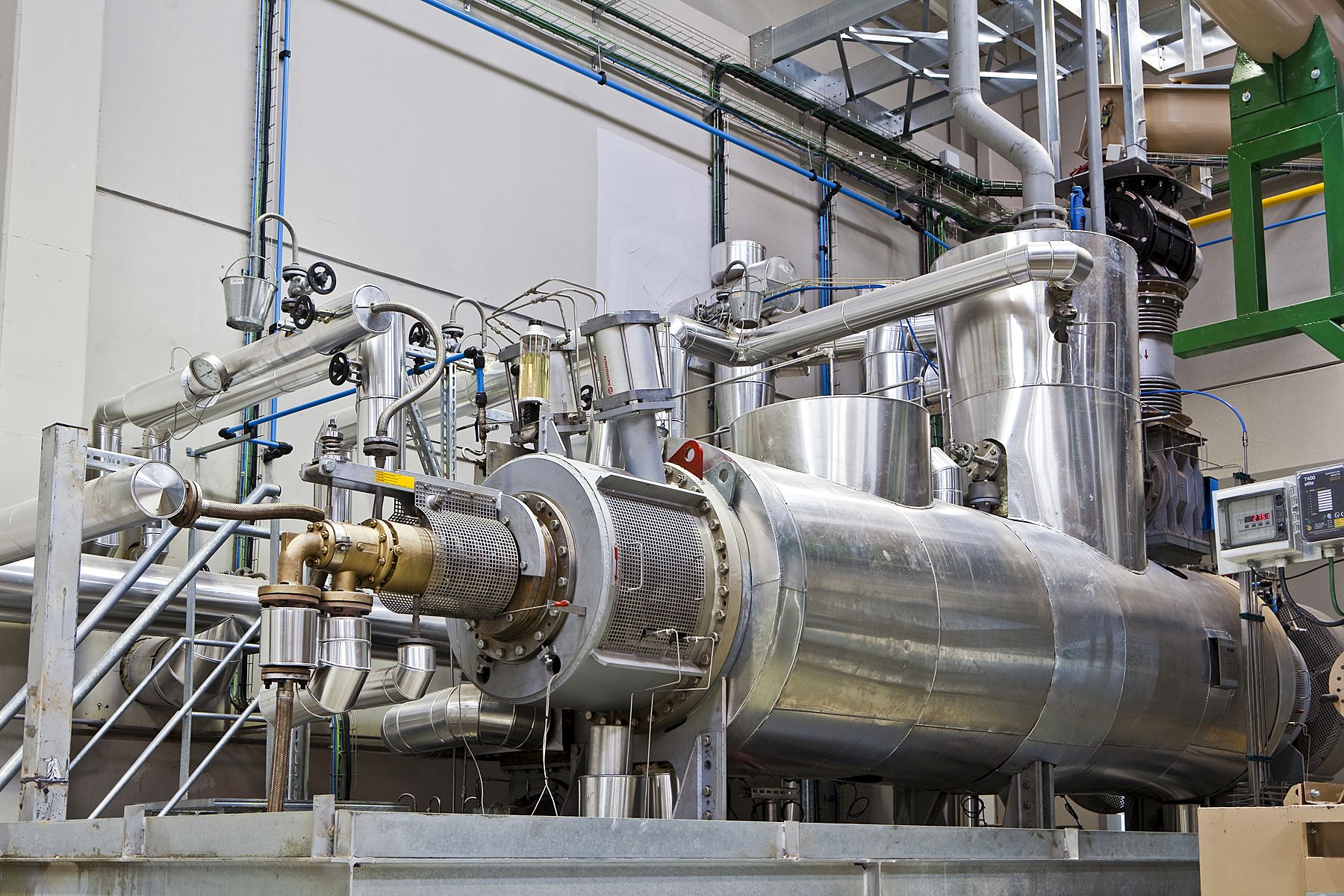
Torrefaction reactor

Development and application of torrefaction treatment on a broad range of materials, the pilot plant is very flexible regarding feedstock bulk density and particle size being able to process difficult fuels with very low bulk density and very high fines content: :
Biomasses, both:
Herbaceous: cereal straw
Woody: pine, poplar, beech, eucalyptus, pawlonia, olive tree pruning , etc.
Variety of organic wastes, including low density materials and materials with high content of fines and dust.
The torrefaction pilot plant (150 - 350 kg/h) consists of a rotary reactor with internal elements designed to achieve a good flow of biomass particles, to improve homogenization and to assure good heat transfer conditions inside it. Reactor heating is carried out externally through the wall and internally using thermal oil (250-300ºC) as heat transfer fluid. Pre-dried and crushed biomass is fed from one side of the reactor and flows to the other side while is heated up to temperatures in the range 240-310ºC to convert raw feedstock into thermally treated product.
The plant is very flexible regarding raw material particle size distribution (0,25-40 mm) and bulk density (50-500 kg/m3) including agricultural biomass like straw. It performs excellent mixing and agitation minimizing internal temperature gradients, easy temperature control, being able to cope with feedstock with exothermal heat of reaction, producing an extremely homogeneous product.
Combustible gases from the reaction are burned in a thermal oxidiser. Condensable compounds are sampled with an off-line sampling with water impingers in cold water. Water vapour content is quantified gravimetrically from the total condensate amount. The sample is characterized by a combination of chromatographic technics (HPLC-DAD, HPLC-RID, GC-FID y GC/MS). Non-condensable fraction is sampled in a gas bag and characterized by micro GC-TCD.
Manufacturer: LIST AG
Model: DT1600
Location: CB2G-Aoiz_Und pretratameinto